
OneRice Breeding Strategy
Theory of Change
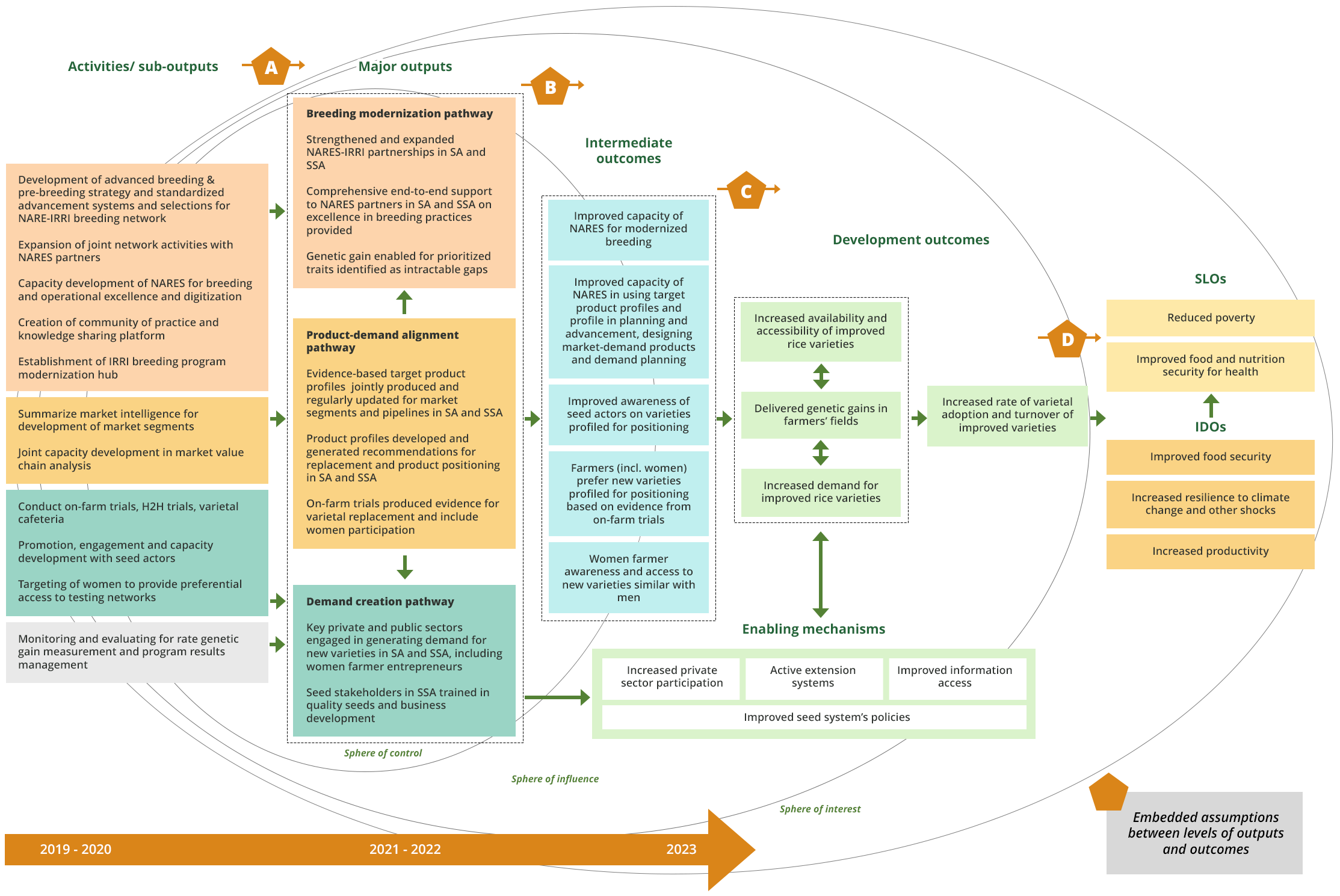
The Rice Breeding Innovations (RBI) initiative aims to enhance rice breeding and seed systems in Asia and Africa, with the goal of increasing the adoption rates of improved rice varieties. Its primary focus is on improving the genetic gains of key rice traits to enable the delivery of superior and suitable rice varieties through seed systems that benefit various stakeholders, particularly farmers and consumers. The adoption of these improved varieties by farmers is crucial for achieving developmental objectives such as increasing farm productivity, household income, and local food security.
To ensure the integration of improved and suitable rice varieties into seed systems and their subsequent adoption by farmers, the RBI addresses crucial components along the rice seed value chains. The RBI's work streams are structured around three impact pathways: breeding modernization, product demand alignment, and demand creation.
The Breeding Modernization Pathway concentrates on expedited development of better rice products by employing proven pre-breeding strategies and adopting modern breeding techniques and technologies. It emphasizes a collaborative model that involves NARES partners in advancing elite lines and developing improved rice varieties. The RBI offers comprehensive technical support, including facilitating the establishment of modern breeding facilities, to modernize NARES' breeding programs and enhance their capacities for sustainably delivering improved rice varieties within seed systems, making them more accessible in the markets.
The Product-Demand Alignment Pathway highlights the RBI's commitment to market-driven breeding and product positioning. It gathers insights from rice stakeholders and secondary sources to build a comprehensive "market intelligence" that informs breeding and product advancement decisions. Target Product Profiles (TPPs) capture the desired rice characteristics identified by rice stakeholders, guiding breeders in developing traits for specific market segments. Product Profiles reflect the characteristics of existing rice varieties and assist RBI product managers in determining suitable varieties for different market segments. Facilitating the development of improved varieties and promoting existing rice products that align with market demands can significantly increase adoption rates among seed system actors.
The Demand Creation Pathway aims to raise awareness and generate demand for improved and suitable rice varieties among seed system actors in specific market segments. The RBI intensifies promotional efforts through extensive on-farm trials, head-to-head trials, and varietal cafeterias, which demonstrate the advantages of these varieties over existing ones in the market or those currently cultivated by farmers. The RBI engages seed system actors in promotional and capacity development activities to positively influence their perception of improved varieties or existing varieties that are being positioned, thus stimulating demand.
By implementing these strategies and pathways, the RBI strives to foster innovation in rice breeding, enhance seed systems, and drive the widespread adoption of improved rice varieties, benefiting farmers, consumers, and the overall agricultural sector in Asia and Africa.
To effectively and sustainably attain this, key enabling mechanisms such as increasing private sector participation, making extension systems more active, improving information access, and improving seed system policies may also be influenced by RBI. Lastly, these outcomes will only be realized if the following key assumptions that are beyond program control hold true.
A. Assumptions from “Activities/sub-outputs” to “Major outputs”
- There are available data to accurately establish and update market segments, target product profiless, product profiles, and customer profiles;
- Seed value chain actors and farmers including women are willing to participate and cooperate in AGGRi activities (demand creation, on-farm trials, capacity building, etc.);
B. Assumptions from “Major outputs” to “Intermediate outcomes”
- NARES partners, breeding networks, farmers and other stakeholders are actively engaged and take-up or apply the capacity development support, technical advice, recommendations from on-farm trials;
- Data management and knowledge sharing platforms are being utilized by partners and stakeholders;
C. Assumptions from “Intermediate outcomes” to “development outcomes
- Favorable policies in improving the overall seed system are in place;
- NARES partners and other breeding programs have sufficient resources to implement and sustain modernized and market-driven breeding strategies and practices;
- Modern and improved rice varieties are accessible and made known to farmers;
- Seed system actors, extension systems, NGOs, and private sector commit to utilize additional capabilities in the delivery of their services and products in favor of AGGRi;
D. Assumptions between “Development outcomes” to AGGRi’s contribution to CGIAR’s IDOs and SLOs
- Continuous varietal replacement is observed. Productivity and income benefits from cultivating modern varieties are significant and sustained over time reducing poverty and improving food security;
- Cultivation of modern rice varieties in farmers’ field are not disrupted by external factors such as health crisis, natural disasters, conflict, and political instability;
- Market conditions remain favorable and conducive for cultivating and marketing improved rice varieties.
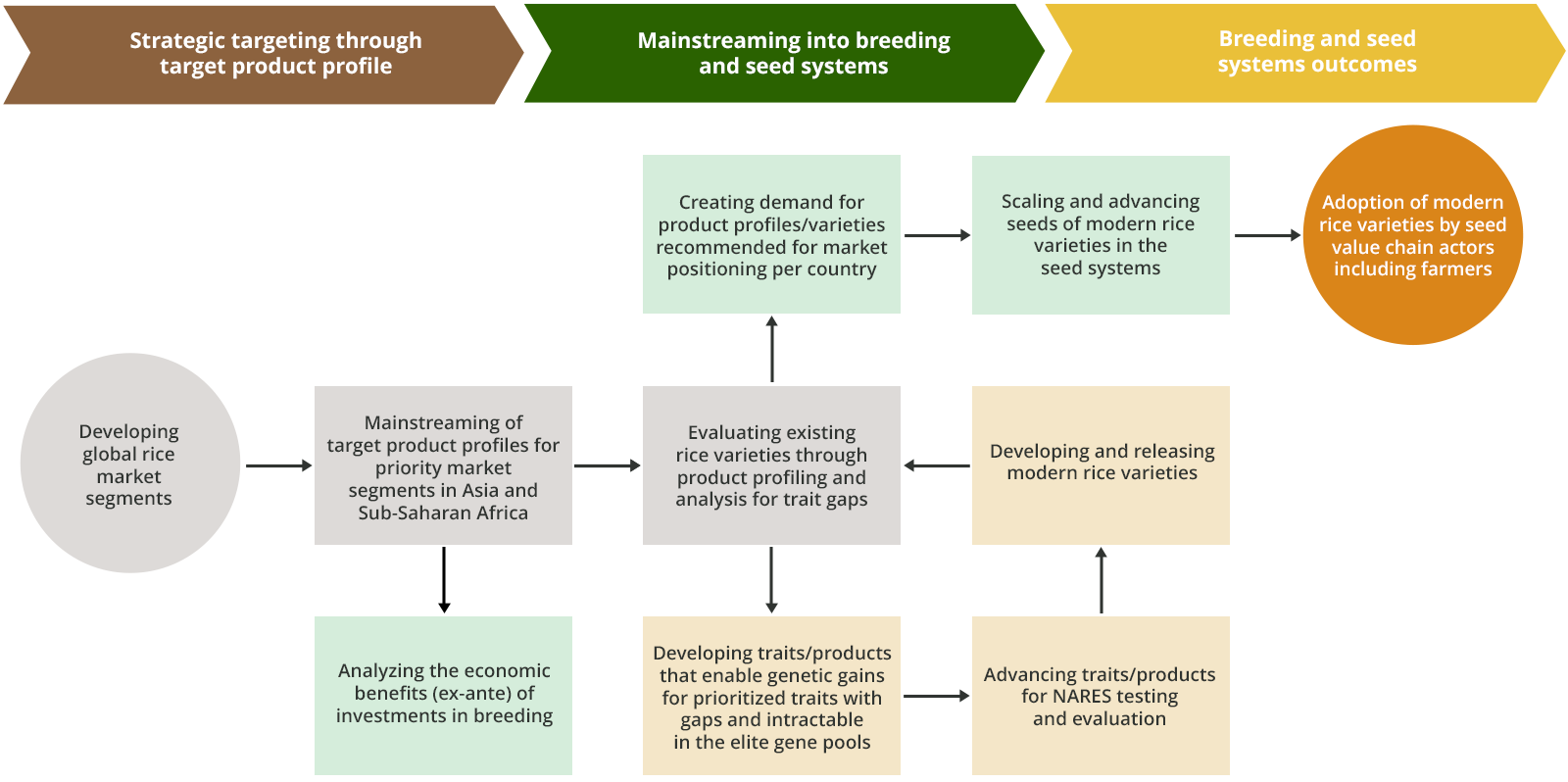
Market Intelligence Mainstreaming Process
Contributing Programs
OneRice
Status: Ended (2019 to 2021)
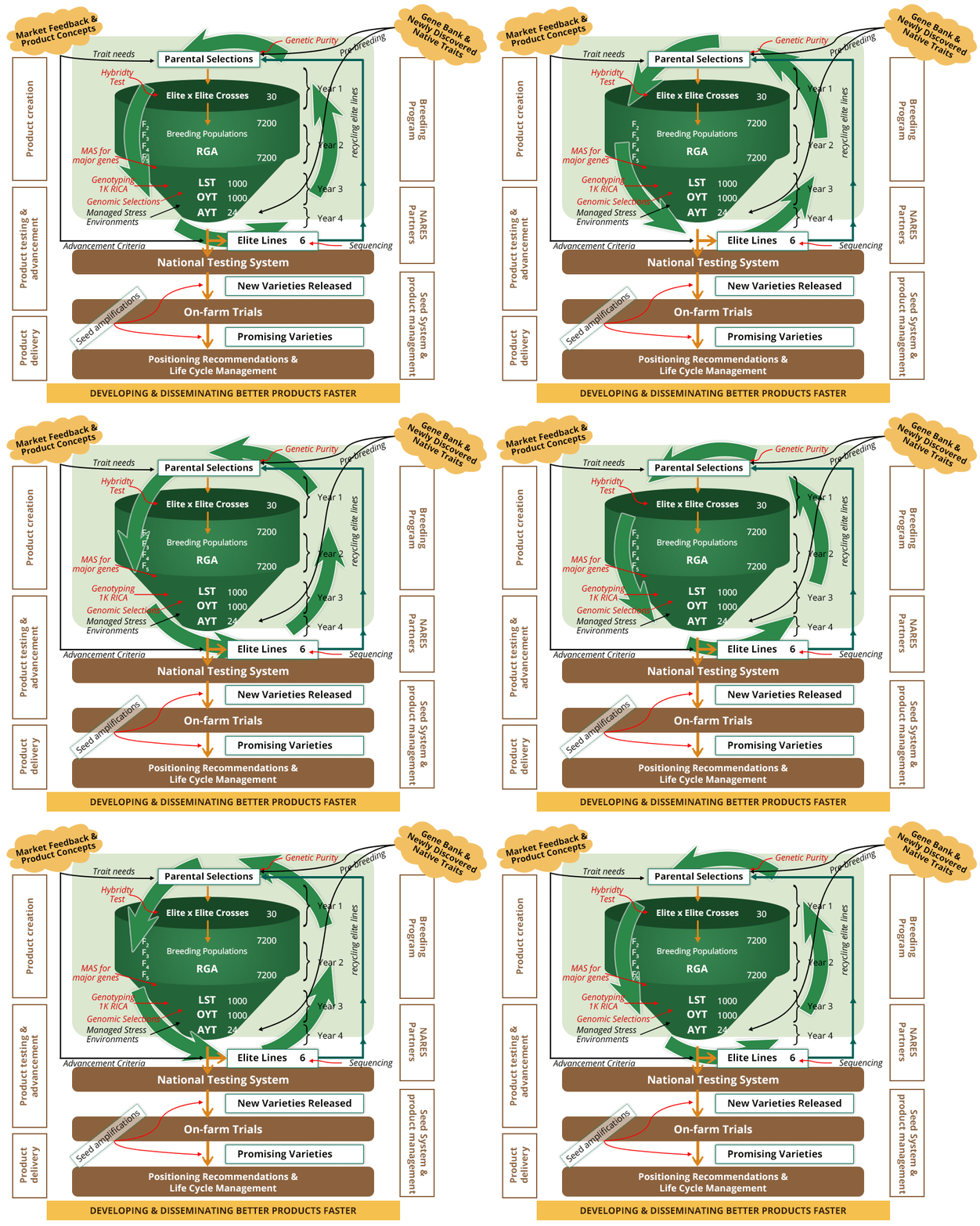
OneRice aims to develop and deliver better rice varieties faster to the farmers in Africa and Asia through a unified rice breeding strategy. This program supports and expands IRRI's efforts to establish international networks among national agricultural research and extension systems (NARES) that are capable of using the most modern breeding technologies and evidence-based practices.
Main Donors:
-
 United States Agency for International Development (USAID)
OneRice PH
Status: On-going (2022 to Present)
OneRicePH is a joint initiative of IRRI and the Philippine Department of Agriculture (DA) to streamline the country’s rice breeding strategies and variety dissemination.
Main Donors:
-
 Philippine Department of Agriculture (DA)
 -
 Philippine Rice Research Institute (PhilRice)
Accelerated Genetic Gain in Rice (AGGRi) Alliance
Status: On-going (2019 to 2023)
AGGRi seeks improve the breeding and seed systems capacity to deliver genetic gains in farmers’ fields to improve the rate of varietal adoption and turnover of improved rice varieties in South Asia and Sub-Saharan Africa. To achieve this, activities and outputs are designed to positively influence the demand and supply for improved rice varieties through breeding modernization, product-demand alignment, and demand creation.
Main Donors:
-
 Bill and Melinda Gates Foundation
Accelerated Breeding Inititiative (ABI)
Status: On-going (2022 to Present)
The CGIAR Research Initiative on Accelerated Breeding aims to develop better-performing, farmer-preferred crop varieties and to decrease the average age of varieties in farmers’ fields, providing real-time adaptation to climate change, evolving markets and production systems.
Main Donors:
-
Bill and Melinda Gates Foundation
-
 Government of Australia
 -
 Government of Germany
 -
 Government of United Kingdom
 -
 Government of United States of America
Market Intelligence Initiative
Status: On-going (2022 to Present)
The CGIAR Initiative on Market Intelligence brings together strategic information on future crops, market segments and trait priorities aligned to the needs and preferences of farmers, agri-business and consumers.
Main Donors:
-
Bill and Melinda Gates Foundation
-
Government of United Kingdom
-
Government of United States of America